The lab studies how host tissues detect and respond to infection, and how these interactions set the stage for either resolution or persistent damage.
Research
Understanding how infection shapes disease
Our research focuses on how viral infections alter host signalling networks and immune responses, driving sustained inflammation and post-viral pathology.
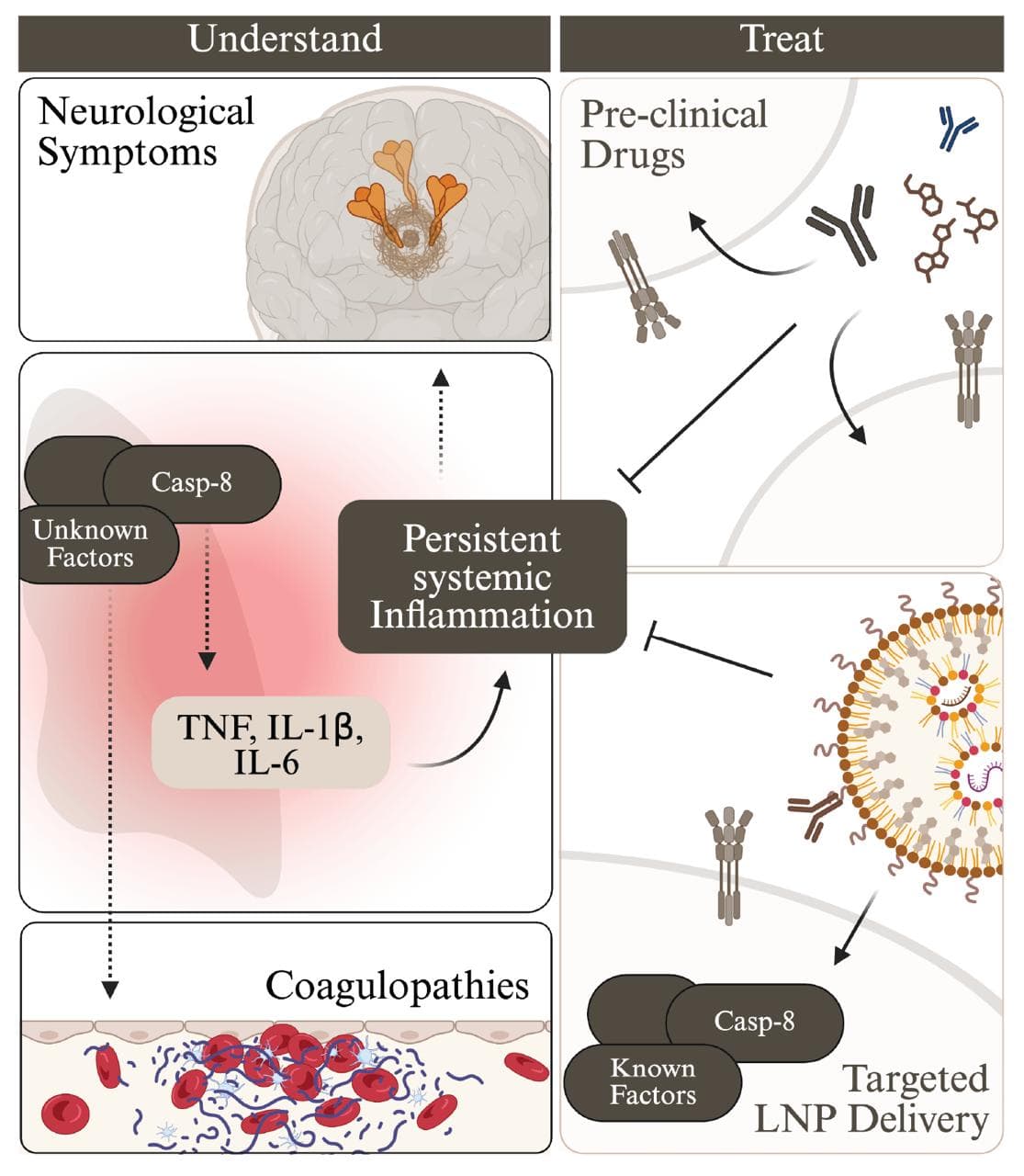
From viral injury to post-viral disease
We study how acute infection is converted into a chronic, multi-organ inflammatory state — and how those mechanisms might be interrupted.
A major focus is long COVID and related post-infectious syndromes, where persistent fatigue, cognitive impairment, and organ dysfunction point to biology that is still poorly understood and urgently in need of tractable interventions.
Research themes
Core questions shaping the lab’s work
We aim to uncover the molecular and cellular mechanisms that underlie post-viral syndromes, linking fundamental biology with clinically meaningful disease trajectories.
We are interested in the pathways that translate microbial sensing into inflammatory programs, tissue injury, and disease-relevant phenotypes.
A central goal is to understand how infection can initiate longer-lasting biological changes that persist after the acute phase has ended.
We use disease-relevant systems and quantitative approaches to connect mechanistic insight with questions that matter for human pathology and therapeutic thinking.
How we work
Focused, multidisciplinary, and translational
To address the complexity of post-viral disease, we bridge virology, immunology, translational medicine, and data-rich computational approaches with experimental platforms designed to reveal mechanism and test intervention.
We dissect how viral infections reshape host signalling networks, inflammatory programs, and tissue states over time.
The lab combines infection biology with advanced imaging, multi-omics profiling, computational analysis, and RNA-based therapeutic delivery approaches.
We aim to connect mechanistic insight to diagnostic markers, intervention strategies, and precision therapies for post-viral disease.